Sundayfawn guide · Toddlers
Personalized books for toddlers, without the guesswork.
How to choose a personalized book for the toddler years, what kind of personalization is worth paying for, and which details make the book feel genuinely familiar.
Fact-checked against current product information · October 1, 2026
The short answer
For toddlers, the most useful personalization is often concrete and recognizable: their name, familiar people, the family pet, a favorite toy, a place they know or the thing they are obsessed with right now.
A name-led or configurable-character book can be a quick, polished gift. A fully custom book makes more sense when you want the child's real people, pets, places and details to influence the story itself.
Choose the book based on how your child likes to read together — pointing and naming, repeating favorite lines, following a simple story, or spotting familiar things on the page.
Choose a toddler gift by the occasion
A birthday celebration
The Birthday Parade builds an animal parade toward a reveal of the child’s name. Compare its published sample with an interest-led story before choosing.
A birthday read-aloud with animals and a name reveal.
A Christmas story to read together
Compare the welcome in The Night Christmas Met You with the child-led adventure in My Turn, Santa!. Check each product’s current age guidance and sample.
Choosing a holiday story by its premise, not the cover alone.
A new baby in the family
The baby-book guide separates a birth keepsake from a story about becoming an older sibling. Choose whose moment the gift celebrates.
A keepsake for the baby or a story for the older child’s new role.
See a finished counting book before choosing
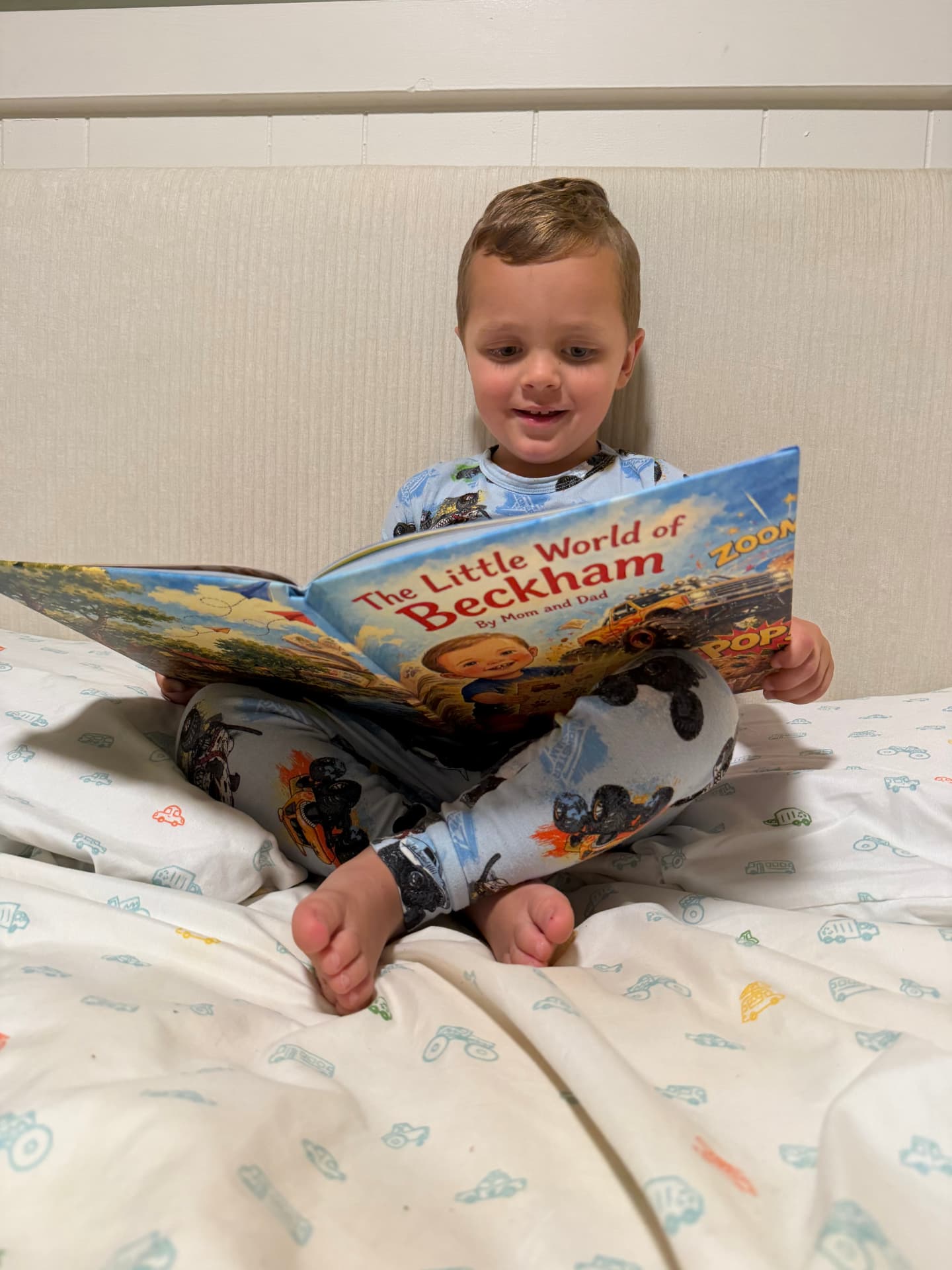
The published Ian Counts the Town example shows a child with his finished counting book. Use it to inspect the named cover and visible illustration. The original brief and a complete input-to-page comparison are not published, so this example does not establish how every scene was personalized.
For a counting read-aloud, open Counting With You. For the meaning of name, likeness and narrative personalization, use the Personalization Depth framework. A customer image, a digital sample and a physical print inspection answer different questions.
Check these details before giving the book
Read at least two interior scenes in the selected product’s sample. Notice the amount of text, continuity of the illustrated child and whether the activity suits how you read together. A sample is an existing book, not a preview of your future order.
Check supported people and pets before collecting photos. Confirm names and permission to use the supplied images, then choose a dedication. For a date-sensitive gift, use the current shipping information and destination estimate; no fixed birthday or Christmas arrival is promised here.
Choose a story around what they notice
For a vehicle-loving toddler, The Great Big Vroom uses favourite trucks as story material. For letters and counting, explore The ABCs of You and Counting With You; choose the reading activity the child enjoys rather than a promised learning outcome.
What “personalized” can mean at this age
The category includes several different products, and the label alone does not tell you how much changes from one child's book to another.
A name-led book starts with a professionally written story and personalizes fields such as the child's name. A configurable-character book can also adjust visual traits and, depending on the title, other story variables or additional people.
A fully custom book uses the child's supplied photos and details as story material, so their actual family, pet, favorite things, places or phrases can influence the finished story and illustrations.
None of those models is automatically best. The useful question is how much of the child's real world you want the book to contain. See the buyer's guide to personalized books for the broader comparison.
Why familiar details earn their place
If your toddler likes to interrupt the story to point, name or go back a page, details on the page matter as much as the plot. Familiar people, pets and objects give that style of reading something to work with.
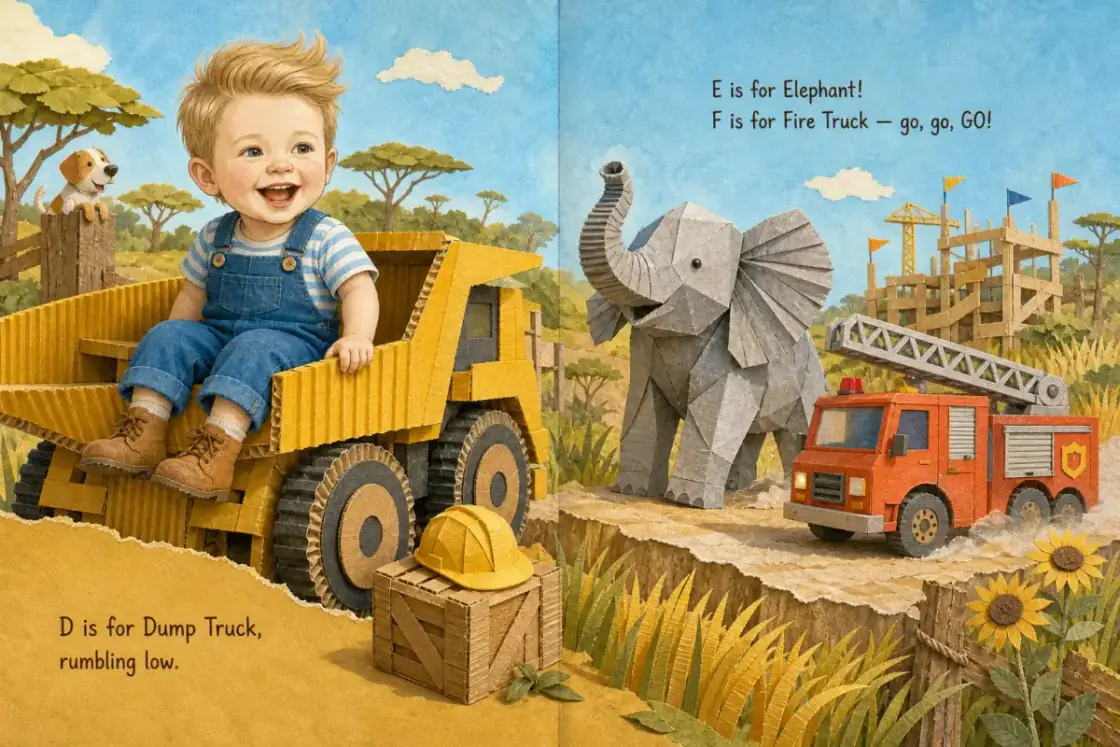
A custom book can turn re-reading into a small recognition game: their dog in the corner of a spread, a favorite truck, Grandma, or a place that resembles somewhere they know. If vehicles are the obsession, The Great Big Vroom is built around that interest; if one beloved comfort toy is the center of their world, The Lost Stuffie turns that relationship into the story.
Keep the claim modest: personalization does not guarantee a child will love a book. It simply gives the family more familiar material to talk about when reading together.
What to include in a toddler's book
If the book is fully custom, these details give the story useful material without turning it into a list of everything the child has ever liked.
The name you actually use
If everyone calls her Josie, use Josie. Family language usually feels more natural than forcing a formal name into every page.
One or two familiar people
Check the selected story’s supported cast first. Where additional people are offered, choose a small recognizable cast rather than promising that every relative can appear.
The family pet
Include a dog or cat only when the selected story supports a pet character; check its options before gathering photos.
One current obsession
Trucks, whales, yellow things, a specific stuffed animal — one strong interest can shape a story better than ten disconnected favorites.
A familiar place
Bedroom, park, Grandma's kitchen or another setting the child knows. It can inspire scenes without needing to be recreated literally.
A family phrase
A nickname, bedtime phrase or funny expression can make the read-aloud sound more like home when it genuinely belongs in the story.
What to keep simple
Dense text. Many families prefer room to stop and talk at this age rather than paragraphs that must be read straight through.
Too many inputs. A custom book does not become better because every food, toy, relative and vacation is forced into it. A few coherent details usually produce a stronger story.
A keepsake hardcover is also a different object from a board book. If the book needs to survive chewing and unsupervised throwing, a board book is the practical tool. A custom hardcover is better treated as a read-together book that lives on the shelf between readings.
Name-led vs. fully custom for a toddler
This compares creation models, not every company or title. Some template-style products offer much more personalization than others.
| Compare | Name-led / configurable book | Fully custom book |
|---|---|---|
| Story starting point | A finished title with defined personalization fields | A brief built from the supplied child and details |
| Child's identity | Name and, on many products, configurable visual traits | Name plus illustrated likeness based on supplied photo reference |
| Family / pets | Varies by title and the fields that product supports | Only where supported by the selected story |
| Specific interests / phrases | Limited to the options offered by that title | Can shape story material when they fit the narrative |
| Creation process | Usually select options and preview the existing title | Share photos/details, then review the completed custom edition |
If speed and simplicity matter most, a well-made name-led book can be a better fit. Fully custom is useful when the child's specific real world is the reason for the gift.
Where Sundayfawn fits
Sundayfawn makes fully custom children's storybooks. You share photos and the details that matter — family members, pets, interests, phrases and places — and those inputs can shape the story and illustrations.
The complete digital edition is included. See storybook product examples, explore the personalized book for a 2-year-old guide, or start a book.
- ✓ 8.5 × 11 inch matte hardcover
- ✓ 38 full-colour pages
- ✓ 80 lb coated interior paper
- ✓ Illustrated likeness from supplied photos
- ✓ Complete digital edition included
- ✓ Photo keepsake spread included
Questions, answered.
What age do personalized books work best for toddlers?
There is no single right age. A useful guide is your own child's reading habits: whether they like pointing at pictures, naming familiar things, repeating phrases or following a simple read-aloud story.
Will a toddler recognize themselves in an illustration?
Recognition varies by child. Familiar cues such as hair, clothing, family members, pets and settings give them more specific things to notice, but no illustration style can guarantee a particular reaction.
How much text should a toddler's personalized book have?
There is no fixed rule. For many read-together situations, shorter passages leave more room to pause, point and talk; the right amount depends on the child and the kind of story.
Is a hardcover practical for a toddler, or should I get a board book?
They serve different uses. Board books are designed for rough independent handling. A custom hardcover works better as a read-together keepsake that an adult brings down from the shelf.
Can I include our dog or cat in the book?
Only when the selected Sundayfawn story supports a pet character. Check that product’s options first, then provide the requested reference photo.
What details make a personalized toddler book feel specific?
Use a small number of strong details: the name you actually call them, a few clear photos, one or two important people, a pet, a current obsession and perhaps one family phrase or familiar place.
Keep reading
Ready to make the one that only your family can make?